Evaluación del efecto cicatrizante de la miel con propóleos en quemaduras
Article Sidebar
Main Article Content
Abstract
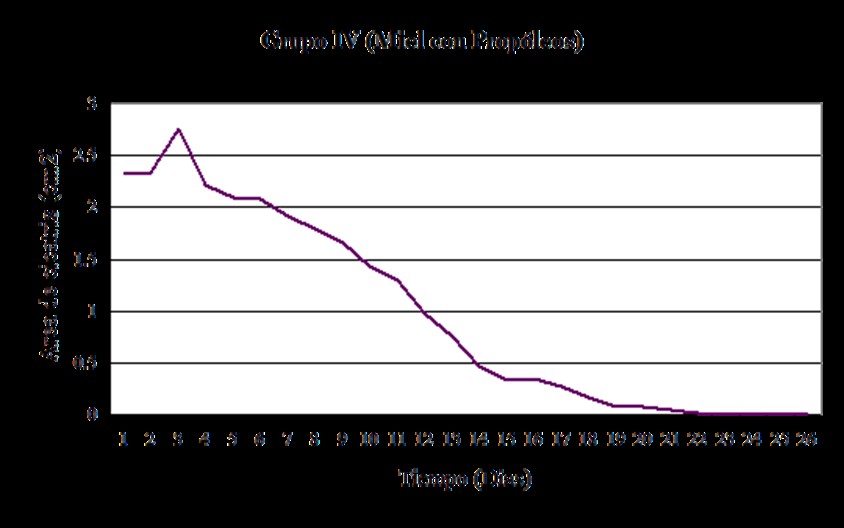
La evaluación del efecto cicatrizante se llevó a cabo en cobayos albinos unisexo. Se formaron 4 grupos de 5 animales cada uno para la posterior aplicación, de forma independiente, de los siguientes tratamientos: alcohol al 70% como control negativo, miel, extracto de propóleos y miel con propóleos, respectivamente, una vez inducida la quemadura.
Diariamente se midieron los parámetros: peso corporal, diámetro de la lesión y observación macroscópica de las áreas lesionadas. A los 28 días se determinó actividad de la enzima Fosfolipasa A2, recuento de glóbulos rojos y conteo diferencial de leucocitos. Se realizó el corte de las zonas regeneradas para la posterior observación histológica con vistas a establecer la calidad del tejido. Los resultados obtenidos arrojaron que la miel con propóleos ejerce un efecto positivo superior respecto al resto de los grupos, aunque no se evidencian diferencias significativas entre la mezcla y el propóleos. No se establecieron diferencias en cuanto a la calidad del tejido regenerado para ninguno de los casos.
Article Details

This work is licensed under a Creative Commons Attribution-NonCommercial 4.0 International License.
Those authors who have publications with this journal accept the following terms of the License Attribution-NonCommercial 4.0 International (CC BY-NC 4.0):
You are free to:
- Share — copy and redistribute the material in any medium or format
- Adapt — remix, transform, and build upon the material
The licensor cannot revoke these freedoms as long as you follow the license terms.
Under the following terms:
- Attribution — You must give appropriate credit, provide a link to the license, and indicate if changes were made. You may do so in any reasonable manner, but not in any way that suggests the licensor endorses you or your use.
- NonCommercial — You may not use the material for commercial purposes.
- No additional restrictions — You may not apply legal terms or technological measures that legally restrict others from doing anything the license permits.
The journal is not responsible for the opinions and concepts expressed in the works, they are the sole responsibility of the authors. The Editor, with the assistance of the Editorial Committee, reserves the right to suggest or request advisable or necessary modifications. They are accepted to publish original scientific papers, research results of interest that have not been published or sent to another journal for the same purpose.
The mention of trademarks of equipment, instruments or specific materials is for identification purposes, and there is no promotional commitment in relation to them, neither by the authors nor by the publisher.
How to Cite
References
Alexandrov, I. S.; Danilov, L. N. (1975). Cualidades antimicrobianas del propóleos. Op. cit., ed. española, pág. 43
Apietroaiei, N.; Iliescu, E. (1975). Formas farmacéuticas a base de propóleos. Utilización y resultados en dermatología y otras afecciones. Op. cit. ed. rumana, pág. 166.
Bolshakova, V. F. (1975). Empleo del propóleos en dermatología. Op. cit., ed. española, pág. 134.
Cueto, D. J. (1990). Los propóleos, sus aplicaciones en la medicina humana.
Del Sol, A. (1981). Las quemaduras y sus diferentes aspectos.
Fernández, F. (1990). Eficacia sistémica de diferentes formulaciones de quitina comparada con sulfadiacina de plata activada. T. de Diploma. Fac. de Farmacia y Alimentos.
Frankel, K. et al. (1993). Inhibition of tumor promoter-mediated processes in mouse skin and bovine lens by caffeic acid phenetyl ester. Cancer Res. Mar. 15; 53 (6): 1 255-61.
Guarini, L. et al. (1992). Growth inhibition and modelation of antigenic phenotype in human melanoma and glioblastoma multiform cells by caffeic acid phenethyl ester. Cell. Mol. Biol. 38 (5): 513-527.
Kramer, R. M.; Johaansen, B. (1990). Characterization of a secretable phospholipase A2 from human platelets. Advances in prostaglandin, tromboxane y leucotriene research. V. 20: 79.
León, N. y col (1992). Fosfolipasemia y su significado en pacientes quemados. Trabajo de Diploma. IFAL. Universidad de la Habana.
PNT/TEC/0312. (1993). Conteo diferencial de leucocitos. CIEB, IFAL. Universidad de la Habana.
PNT/TEC/0313. (1993). Determinación de fosfolipasa A2. CIEB, IFAL. Universidad de la Habana.
PNT/TEC/0317. (1993). Conteo de glóbulos rojos. CIEB, IFAL. Universidad de la Habana.
Rao, C. V. et al. (1992). Effect of caffeic acid esters on carcinogen induced mutagenecity and human colon adenocarcinoma cell growth. Chem. Biol. Interact. Nov. 16; 84 (3): 277-290.
Robbins, S.; Cotran, R.; Kumar, V; Collins, T. (2000). Patología estructural y funcional. 6ta edición. 1: 16-26. 8: 227-286.
Schmidt, K. H. and Miller, A. (1988). Changes in the pattern of microsomal fatty acids in rat liver after thermal injury and therapeutic intervention. Burns, 14 (1): 25.
Tsakoff, T. (1975). Estudio de las propiedades anestésicas locales del propóleos y el efecto de las mismas en operaciones en ovejas y perros. Op. cit., ed. española, pág. 59.
Velescu, G.; Marim, M. (1975). Problemas en farmacoquímica y farmacodinámica. Op. cit., ed. rumana, pág. 105.