Comparison of direct and indirect method to measure in grooming behavior Apis mellifera bee colonies infested with Varroa Destructor
Article Sidebar
Main Article Content
Abstract
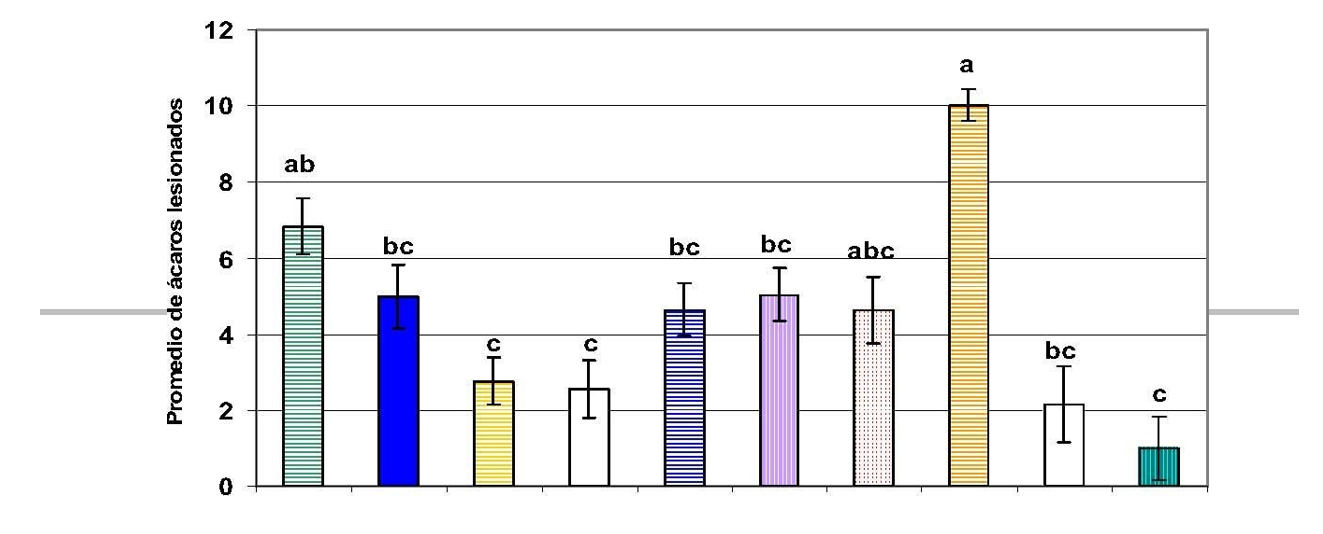
The varroosis is an external parasitosis caused by the mite Varroa destructor (Anderson and Trueman 2000 ) affecting bees Apis mellifera . Mite adversely affects bees and vector serving as bacteria, viruses and fungi , increasing the incidence of various diseases (Ball , 1994, Martin 2001). The species Apis cerana , the mite has adapted due to resistance mechanisms developed by the long period of adaptation that has existed between them ( Ritter 1981 ) , adaptation has not occurred in bees A. mellifera . One of the most studied mechanisms of resistance is grooming behavior , which is that the worker bees perform vigorous movements of the chest and abdomen , and cleanse your body with the legs and jaws. The direct method is founded on artificially infested with adult female bees of varroa.El indirect method is basically doing the counting and individual analysis mites collectors fall into traps placed on the floor of the work aims colmenas.El grooming behavior studied through the measurement of the reaction time of the bees to a varroa placement on the body (direct method) and quantifying the number of mites injured (indirect method ) in different genotypes clustered colonies and estimating the correlation coefficient between the reaction time in seconds and the total injured mites . Direct evaluation was performed individually observing grooming behavior 100 bees from each of the colonies of the different experimental groups via two repetitions (50 bees repetición.La indirect evaluation grooming behavior was performed through quantification mites which damage occurred only apparent legs idiosoma only and combination and idiosoma leg injuries
Article Details

This work is licensed under a Creative Commons Attribution-NonCommercial 4.0 International License.
Those authors who have publications with this journal accept the following terms of the License Attribution-NonCommercial 4.0 International (CC BY-NC 4.0):
You are free to:
- Share — copy and redistribute the material in any medium or format
- Adapt — remix, transform, and build upon the material
The licensor cannot revoke these freedoms as long as you follow the license terms.
Under the following terms:
- Attribution — You must give appropriate credit, provide a link to the license, and indicate if changes were made. You may do so in any reasonable manner, but not in any way that suggests the licensor endorses you or your use.
- NonCommercial — You may not use the material for commercial purposes.
- No additional restrictions — You may not apply legal terms or technological measures that legally restrict others from doing anything the license permits.
The journal is not responsible for the opinions and concepts expressed in the works, they are the sole responsibility of the authors. The Editor, with the assistance of the Editorial Committee, reserves the right to suggest or request advisable or necessary modifications. They are accepted to publish original scientific papers, research results of interest that have not been published or sent to another journal for the same purpose.
The mention of trademarks of equipment, instruments or specific materials is for identification purposes, and there is no promotional commitment in relation to them, neither by the authors nor by the publisher.
How to Cite
References
Anderson DL, Trueman JWH. Varroa jacobsoni (Acari: Varroidae) is more than one species. Exp Appl Acarol 2000;24:165-189.
Arechavaleta VMA. Variación genética en la resistencia de las abejas Apis mellifera L. al parásito Varroa jacobsoni O. e impacto relativo de los mecanismos que les confieren esa resistencia (tesis de Maestria en Producción Animal). México (DF): Facultad de Medicina Veterinaria y Zootecnia UNAM, 1998.
Arechavaleta, VME y Guzmán-Novoa, E (2000) Producción de miel de colonias de abejas (Apis mellifera L.) tratadas y no tratadas con un acaricida contra Varroa jacobsoni Oudemans en Valle de Bravo, Estado de México. Veterinaria México 31(4): 381-384.
Ball BV. Host-parasite pathogens interactions. In: Mathenson A, editors. New perspectives on varroa. Cardiff UK: International Bee Research Association Press, 1994:5-11.
Boecking O, Ritter W. Grooming and removal behavior of Apis mellifera intermissa in Tunisia against Varroa jacobsoni. J Apic Res 1993;33:127-134.
Calatayud F, Verdu M. Cómputo de ácaros en los detritus de la colmena. Vida Apícola 1995;69:41-45.
Calderone N. Evaluating subsampling methods for estimating numbers of Varroa jacobsoni mites (acari:Varroidae) collected on sticky boards. J Econ Entom 1999;92(5):1057-1061.
Casanova O. Daños causados a Varroa jacobsoni (acari:dermanicidae) por comportamiento “grooming” de abejas africanizadas (Hymenoptera:Apidae). Memorias del X Congreso Venezolano de Zootecnia; 2000 noviembre 29-30; Guanare (Portuguesa) Venezuela. Venezuela: Asociación Venezolana de Producción Animal, 2000.
Correa-Marques, De Jong D. Estudo da resistencia a varroatose em abelhas Apis mellifera no Brazil. Memorias del V congreso Iberoamericano de Apicultura; 1996; Mercedes Uruguay. Uruguay, 1996:146-147.
10.Correa-Marques. Aspectos da resistencia da abelha Apis mellifera ao ácaro Varroa jaobsoni no Brasil (Dissertacao de mestrado em ciencias-área: Entomología). Riberao (Preto-USP) Brasil: Faculdade de filosofía, ciencias e letras,1996.
Correa-Marques MH, Medina ML, Espinosa ML, De Jong D, Echazarreta GC.Estudio de los ácaros con daños y grados de infestación en colonias de abejas africanizadas (A. mellifera L.) en Yucatán, México. Memorias del VI congreso Iberoamericano de apicultura, XII Seminario Americano de Apicultura; 1998 agosto 17-21; Mérida (Yucatán) México. México: Unión Nacional de Apicultores,1998.
De Jong D. Mites varroa and other parasite of brood. In: Morse RA, editor. Honey bee pests, predators and diseases. 3° ed. USA:The A.I. Root Company, 1997.
Espinosa MLG. Estudio de tres factores asociados con la tolerancia al ácaro Varroa jacobsoni Oud. En colonias de abejas africanizadas Apis mellifera L. en Yucatán, México (tesis de Maestría). Yucatán México: Facultad de Medicina Veterinaria y Zootecnia UADY, 1998.
Espinosa MLG, Guzman-Novoa E, Sánchez AA, Leyva MN, Uribe RJ, Prieto MD. Determinación de la confiabilidad de un método directo para diferenciar el comportamiento de acicalamiento entre abejas de diferente genotipo. Memorias del 11° Congreso de Actualización Apícola; 2004; Monterrey (Nuevo León) México. México (DF): Asociación de Médicos Veterinarios Especialistas en Abejas, 2004:79-86.
Flores JM, Ruiz JA, Ruz JM, Puerta F, Campano F, Padilla F, et al. El fenómeno de la resistencia natural a la varroosis. Vida Apícola 1995;74: 44-51.
Flores JM, Ruiz JA, Ruz JM, Puerta F, Campano F, Padilla F, et al. El grooming en Apis mellifera iberica frente a Varroa jacobsoni Oud. Arch Zootec 1998;47(178):213-218.
Fries I, Aarhus A, Hansen H, Korpela S. Comparison of diagnostic methods for detection of low infestation levels of Varroa jacobsoni in honey-bee (Apis mellifera) colonies. Exp Appl Acarol 1991;10:279-287.
Harbo, JR y Harris, JW (1999) Heritability in honey bees (Hymenoptera: Apidae) of characteristics associated with resistance to Varroa jacobsoni (Mesostigmata:
Varroidae). J. Econ. Entomol. 92: 261-265.
Kraus B, Page RE. Population growth of Varroa jacobsoni Oud. In Mediterranean climates of California. Apidologie 1995;26:149-157.
Lodesani M, Vecchi MA, Tommasini S, Bligiardi M. A study on diferent kinds of
a. damage to Varroa jacobsoni in Apis mellifera ligustica colonies. J Apic Res 1996;35(2):49-56.
Martin SJ. The role of Varroa and viral pathogens in the collapse of honey bee colonies: a modeling approach. J Appl Ecol 2001;38:1082-1093.
Moretto G. Mecanismos de defesa de operarias de Apis mellifera a varroatose e a taxa de reproducao do acaro Varroa jacobsoni. Memorias del X Congreso brasileño de Apicultura; 1994 agosto 14-18; Pousada (Rio Quente) Brasil. Brasil, 1994:199-203.
Moritz R. Selection for varroatosis resistence in honeybees. Parasitology Today 1994;10(6):236-238.
Peng YS, Fang Y, Xu S, Ge L. The resistance mechanism of the Asian honey bee, Apis cerana Fabr., to an ectoparasite mite Varroa jacobsoni Oudemans. Journal Invertebrate Pathology 1987;49: 54-60.
Rinderer TE, De Guzman LI, Delatte GT, Stelzer JA, Lancaster VA, Kuznetsov V, et al. Resistance to the parasitic mite Varroa destructor in honey bees from fareastern Russia. Apidologie 2001;32:381-394.
Ritter W. Varroa disease of the honeybee Apis mellifera. Bee World 1981;62:153159.
Vandame R, Morand S, Colin M, Belzunces LP. Parasitism in the social bee Apis mellifera: quantifying costs and benefits of behavioral resistance to Varroa destructor mites. Apidologie 2002;33:433-445.
Wallner A. Der Varroakillerfactktor. Dtsch Bienen J 1994; 7:372-374.